| | ||||||||||||||||||||||||||||||||||||||||||||||||||||||||
| ||||||||||||||||||||||||||||||||||||||||||||||||||||||||

Get In Touch With A Low Wage Teleporter
Tuesday, June 15, 2021
U.S. and E.U. Reach Deal to Suspend Drinks Tariffs for Five Years




Wine Enthusiast
Wine Enthusiast |
| The Elemental Appeal of Goldschläger, A ’90s Icon Posted: 15 Jun 2021 04:30 AM PDT  When industry veteran Bo Wayne, 54, got his first bartending gig in 1993 at a gay bar in New York City's East Village, it was "the city of Goldschläger," he says, referring to the Swiss cinnamon liqueur's prominence. "There was a time where we were constantly doing shots of Goldschläger," he adds, with perhaps a trace of nostalgia. By the time Wayne left New York City for a decade-long stint in Los Angeles in 1997, Goldschläger was still going strong. And then, suddenly, it vanished. At least that's how it seemed to Wayne, who muses about its seeming disappearance in the early 2000s. "I just thought that it was no longer being made," he says.   Except, it doesn't appear there was ever a break in production. (Diageo, the company that owned Goldschläger during this period, didn't respond to a request for comment.) It seems the public's thirst for Goldschläger simply waned, as other spirits and cocktail trends gained traction. Nonetheless, Goldschläger's reputation looms large in the minds of those who came of age in its heyday. Going for the goldLos Angeles-based travel, food and drink writer Katherine Alex Beaven, 40, doesn't recall the very first time she was introduced to Goldschläger, but she remembers being impressed by it in high school. "We all thought it was extremely fancy because of the gold flecks," says Beaven. Brooke Herron, 41, owner of Local Food & Drink, a digital marketing company in Sonoma, also admits she was underage when she first discovered Goldschläger. "I honestly think it was simply the fact that a bottle on the shelf at the liquor shop had gold flakes in it," says Herron of the spirit's appeal. She and her friends would joke that they should "go for the gold."  Although spirits bottles are often eye-catching, Goldschläger commands attention. The liqueur is packaged in a clear glass bottle with a long neck and a bulbous body. In addition to the gold flakes that float inside the bottle, gold details dominate the packaging, from the gold bottle top to the official-looking round, gold medallion on its front. In 2018, Sazerac, which owns more than 450 global spirits, added Goldschläger to its portfolio. Asked why the company acquired it, Julia Watson, Sazerac's brand director says, "For the gold, of course." Goldschläger, a German word which "refers to the gold-leaf makers who beat bars of soft gold into wafer-thin sheets," according to the description on Sazerac's website, is described as containing "feather-light, palatable gold flakes." The liqueur was produced in Switzerland until the 1990s, when it was purchased by Diageo, a British multinational beverage company. Production moved to Italy briefly before it returned to Switzerland. Today, it's produced in Montreal, says Watson. Shot in the darkRaven Adrian, 37, remembers being entranced by Goldschläger's packaging. "It was mesmerizing to shake the bottle and watch the pretty flakes," she says. Plus, it was easy to drink, even though it burned enough to feel "hardcore." Seemingly everyone had it in their liquor collection, says Adrian, and it played a prominent role in a seven deadly sins-themed party she hosted for her friend's 21st birthday some 16 years ago. It involved a game with something called the "penalty of wrath," where a shot of Goldschläger, Absolut Peppar and a drop of tabasco were offered as punishment. Adrian hasn't had Goldschläger since that epic party, she says, but "would love to revisit it as an after-dinner sipper now."
Mike Driscoll, a former social studies teacher, keeps Goldschläger stocked at his bar, Founding Fathers Pub in Buffalo. It hasn't been a big seller for decades, Driscoll says, but he finds it tasty mixed with an Irish cream liqueur like Baileys. When Goldschläger ruled the shot scene, Wayne used it to make something called an Oatmeal Cookie. Versions can be found online, but a popular iteration includes Bailey's Irish Cream, butterscotch schnapps, and, of course, Goldschläger. On occasion, Wayne also mixed the cinnamon liqueur with cranberry juice or Dr. Pepper.  Beaven and her friends mostly did shots. They really enjoyed the taste, she says. "Slightly sweet and cinnamon-y with a kick that would light a fire in the back of your throat." Herron also recalls the intense cinnamon flavor, but it's not with any particular fondness. Following one particularly Goldschläger-soaked night, it took years before she could tolerate cinnamon-flavored gum or candy, she says. These days, cinnamon chewing gum is bearable, but "I still will not touch any cinnamon-flavored alcohol to this day," says Herron. Wayne believes that chilling the spirit is a good way to decrease its harsh burn, but that wasn't a priority for the hard-drinking East Village crew he was serving in the '90s. "We were hardcore," he says. "Why waste time chilling it?" Where is it now?Goldschläger can be found at retailers and restaurants around the country, says Watson. She's unable to disclose actual sales figures, however. This is news to Wayne, who says he can't remember the last time he saw Goldschläger in a bar. After it "disappeared," people started shooting Jägermeister, says Wayne. He doubts anyone still shoots Goldschläger. In fact, he says that the shots scene, though not obsolete, isn't what it once was, thanks to a thriving cocktail culture and more options. Wayne says that people still shoot Jägermeister and other spirits, like Fireball. Neither is on the menu at Spanish Diner, the bar/restaurant on Manhattan's Far West Side where he tends bar. Still, Goldschläger is far from extinct. In fact, this March, Sazerac introduced a new iteration, Goldschläger 107. At 107 proof, a nod to the spirit's original 100-plus proof formula, it seems distinctly hardcore. |
| The Differences Between Mountain and Valley Wines, Explained Posted: 15 Jun 2021 04:00 AM PDT  "Napa Valley is a wine region with incredible diversity," says Rebekah Wineburg, viticulturist and winemaker for Quintessa, in Napa's Rutherford American Viticultural Area (AVA). "Looking at differences between mountain and valley AVAs is a good start to understanding that diversity." Elevation is the most obvious influence on wines made from grapes grown in these areas. It also impacts factors like fog, topography, soil type and diurnal range, or difference in day and night temperatures. The most obvious ways mountain wines announce themselves in the glass is by mouthfeel and tannin texture, Wineburg says. "As a gross generalization, mountain tannins are tighter, stronger, with a lot of length and need more time in barrel and bottle to develop," she says. "Valley floor tannins are plush, dense, but without the length." For Alan Viader, the distinction between mountain and valley wines comes down to concentration of aroma and flavor. He's the director of operations and winemaking at Viader Vineyards & Winery, located at the foothills of Napa's Howell Mountain. Vines grow on a steep 32% incline from 480 to 1,200 feet above sea level in soils low in nutrients and moisture. As a result, these vines need to dig deep to find water. Their berries ripen slower, which produces smaller, more concentrated grapes that create intense aromas and flavors. High altitudes can also have moderate temperatures, though conditions tend to get cooler with elevation. In Napa, vines above the fog line with more regular sun exposure can experience less range in temperature between day and night. "We don't get the extreme highs or lows you would experience on the valley floor," says Viader. 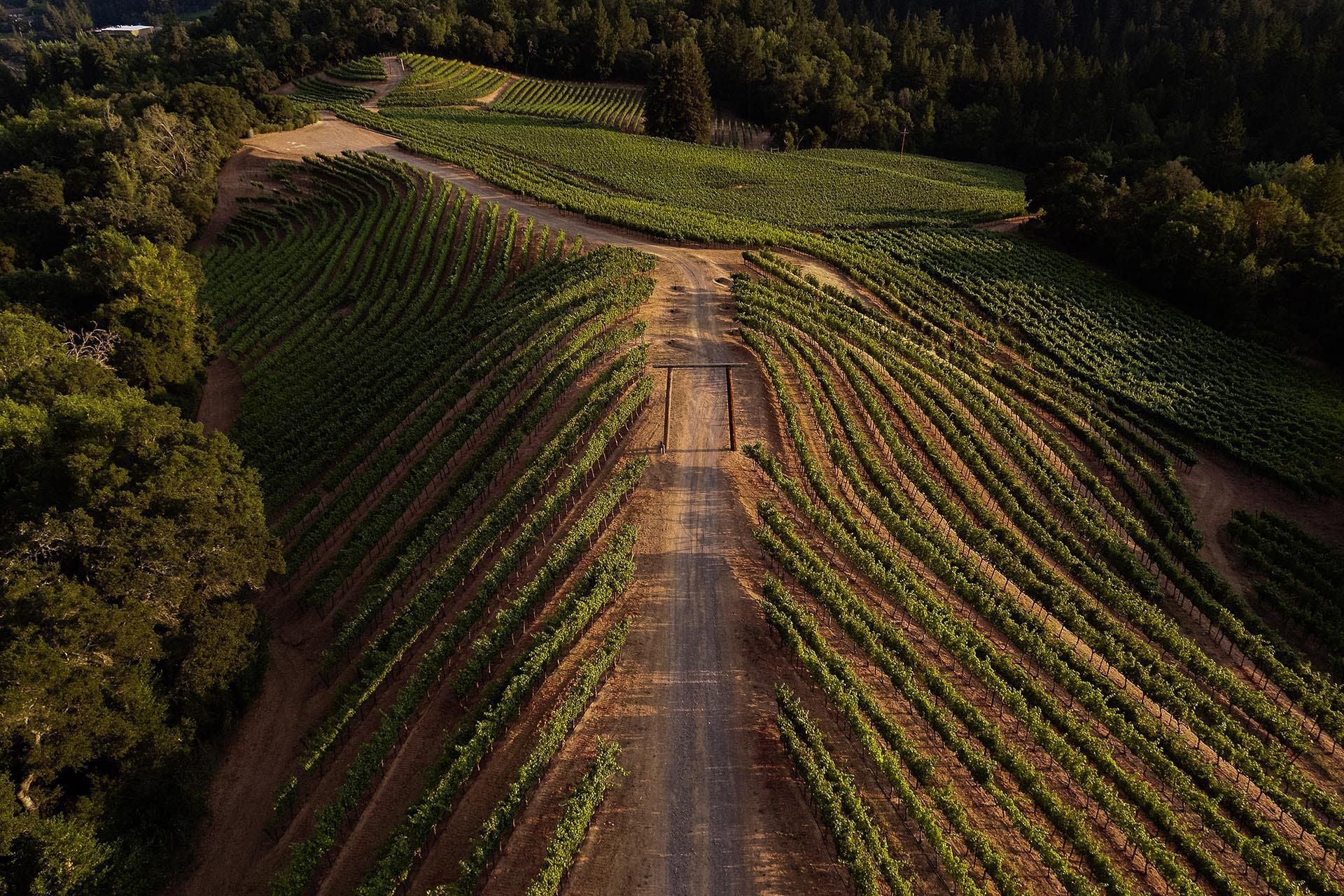 These conditions affect the grapes and wine in different ways. "Moderate temperatures…help stretch the growing season and allow fruit to ripen at a slow, steady pace," says Laura Deyermond, viticulturist at Newton Vineyard, which has estate vineyards in Spring Mountain and Mount Veeder AVAs. Slower skin development and sugar accumulation in mountainous AVAs produce grapes with "classic berry aromas," says Deyermond, often along with deeper color and firmer tannic structure. All can help develop ageability. While hillside soils are predominantly rocky, "soils across the valley floor are actually quite variable," says John Ruel, CEO of Trefethen Family Vineyards in Napa's Oak Knoll AVA. "Vines planted on vigorous soils need more canopy management to dial back the vigor," he says. Trefethen's piece of Napa Valley floor has a mixture of soils, which Ruel says helps promote diversity in his wine program. "Areas with high gravel content are well-drained, thus suited to Cabernet Sauvignon in particular," he says. "Areas with richer soil are better suited to varieties like Merlot and Chardonnay." 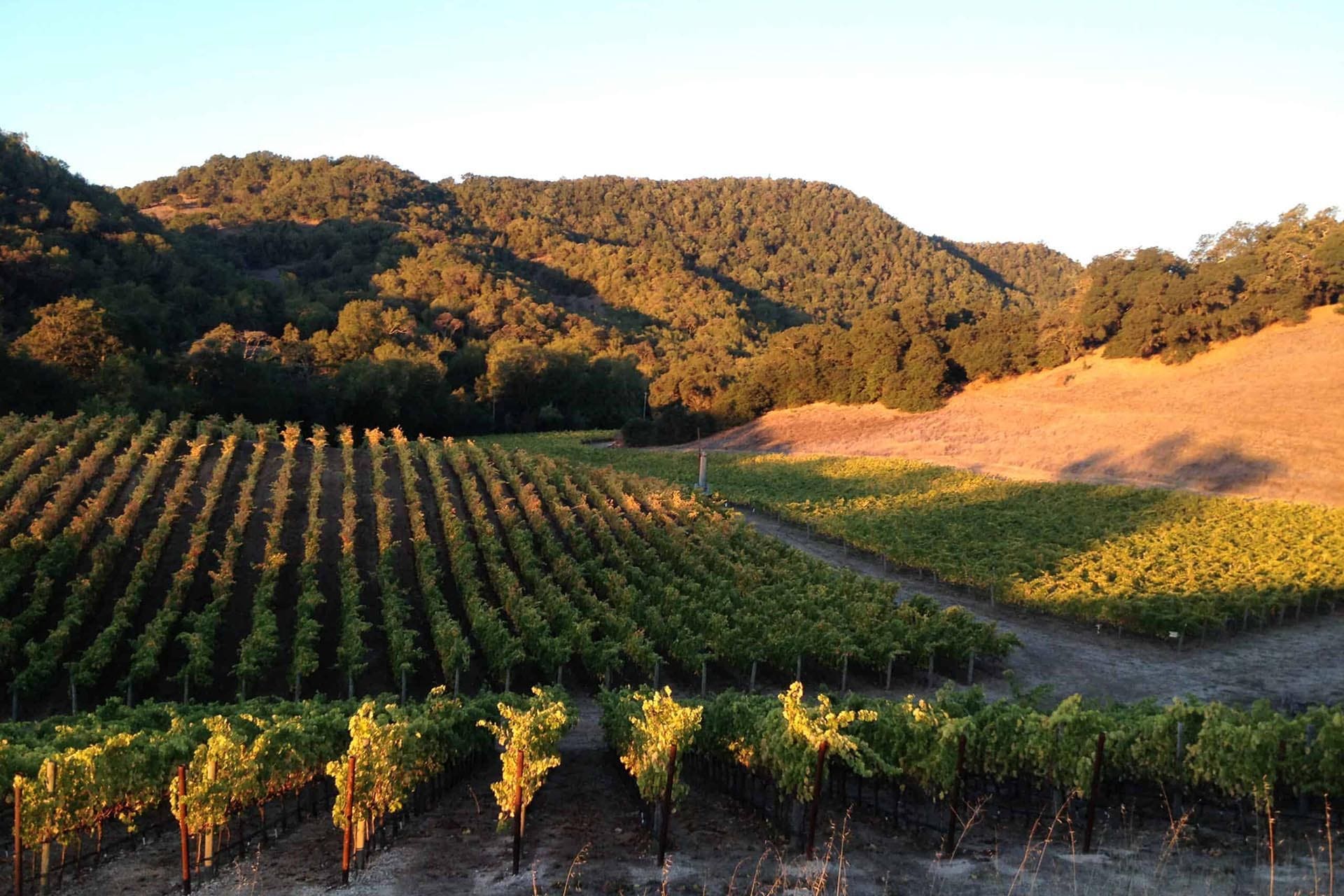 Where Trefethen's topography is predominantly flat, Quintessa has rolling landscapes that provide "both mountain and valley characteristics," says Wineburg. "The eastern hills with white-ash soils produce wines with floral character, red fruit and a distinctive length and fine-chalk texture to the tannins. The central and western hills with mixed volcanic and sandy soils produce wines with deep red and black fruit and concentrated, supple tannins." In the end, quality grapes and world-class wines come down to good viticultural practices and vine balance, which can mean different things due to environmental influences. "Great wine can be made in the hills and on the valley floor," says Ruel. "As long as the grower understands the site and the science." |
| You are subscribed to email updates from Wine Enthusiast. To stop receiving these emails, you may unsubscribe now. | Email delivery powered by Google |
| Google, 1600 Amphitheatre Parkway, Mountain View, CA 94043, United States | |
Aussie Home Brewer
Aussie Home Brewer |
- Lactic Acid 88% How much is too much to reduce pH
- CraftBeerPI Brew Controller
- Free Fridges - Cranbourne
- Mashmaster MiniMill with 12VDC Motor, speed controller and hopper
| Lactic Acid 88% How much is too much to reduce pH Posted: 15 Jun 2021 06:45 AM PDT First post long time reader...... I've been brewing all-grain for over a year now using a 65L Brewzilla. I'm very new at experimenting with water salt additions to the mash. I'm a little concerned with the amount of lactic acid that my recipe from Brewfather calculated (16.8ml for a 50L batch) to bring down my pH level to 5.2pH. Looking to brew tomorrow so I've already purchased my grain bill, concerned with the 16.8ml of lactic acid and if you'll be able to taste the acid in the finial... Lactic Acid 88% How much is too much to reduce pH |
| Posted: 14 Jun 2021 10:23 PM PDT Hi, I like to present my Raspberry PI base brew controller CraftBeerPI. Features: - Control as many kettles as you like - Hardware control: agitator, heater, pumps, valves - Installation wizard - Flexible brew steps - Automatic and manual steps - Smartphone, tablet and desktop user interface - 3 standard kettle automatic logics - Custom logics can be implemented easily - Recipe book - Temperatur chart for each kettle - Support for direct GPIO, PiFace or Gembird USB Socket - Support for... CraftBeerPI Brew Controller |
| Posted: 14 Jun 2021 08:59 PM PDT Hi, I've got two fridges up for grabs. One has a freezer too. Both work, but I don't have room for them at my place. Already have two fridges and a chest freezer here. GF would kill me if i added more. They are located in Cranbourne, Vic, at my dads place. He is moving to QLD so wants them gone ASAP. First fridge, also has a freezer. This thing gets really cold. With the back plate freezing up if you turn the temp down too low within the fridge. So..be wary of that. Great for cold crashing... Free Fridges - Cranbourne |
| Mashmaster MiniMill with 12VDC Motor, speed controller and hopper Posted: 14 Jun 2021 10:48 AM PDT Hi all, Selling my mill which is the model irectly preceding the fluted roller available now I believe. Comes with 12VDC Motor and speed controller from motion dynamics. I fitted a dual universal joint coupling to overcome difficulties in alignment which work a treat. Has a home made hopper which works great ad holds around 6kg of grain from memory. At a guess it's maybe run only 300kgs of grain all up. The total of above was over $500 I will optionally sell with high quality 12VDC (black... Mashmaster MiniMill with 12VDC Motor, speed controller and hopper |
| You are subscribed to email updates from Australia & New Zealand Homebrewing Forum. To stop receiving these emails, you may unsubscribe now. | Email delivery powered by Google |
| Google, 1600 Amphitheatre Parkway, Mountain View, CA 94043, United States | |
Regala a Papá un Vino tan Exclusivo como Él 🍷
|


Subscribe to:
Posts (Atom)

[Get] Deals On Wine Products. RSS Feeds Page #1

How To Make Wine YouTube Videos And Home Brewing Products

YouTube Channels / Beer Magazines / Beer Podcasts / Beer Blogs With Rss Feeds !


