Air Compressor Workforce Lever Blow Gun with Rubber Tip Each and every Workforce blow gun is manufactured to the most exacting standards of engineering and craftsmanship. This blow gun is for use in regular or all weather conditions. Inlet: 1/4 in. F...[Read More] Our Price: $15.74 [Add to Cart]
Carbon Snake from Liquor QuikThis is a carbon purification filter which removes unwanted flavors and odors from distillates and ethanol alcobases. It can be installed on any size plastic pail or other container. Instructions are included, available i...[Read More] Our Price: $17.84 [Add to Cart]
Moe's Original BBQ is known for its boozy milkshake, the Bushwacker. When dine-in service at restaurants shifted to takeout last year due to the pandemic, Moe's locations on Alabama's Gulf Coast were able to sell Bushwackers to go thanks to a temporary measure by the state.
"That was a pretty big deal for us," says Mark White, owner of six Moe’s outposts in southern Alabama.
On March 24, 2020, Alabama's regulatory ABC Board passed an amendment that bars and restaurants could sell takeaway beer, wine or spirits so long as the packages containing alcohol were sealed and cocktails weren't pre-mixed.
White's restaurants created Bushwacker kits containing the ice cream base and miniature bottles of rum, so customers could create them at home. They sold Margarita and Bloody Mary kits, too.
"It was awesome because one of our restaurants has a drive-through, so we were selling barbecue and booze out of the drive-through window," says White. "We were like, 'This is incredible.' We're hoping that it would last forever."
"This feels like a rug being pulled from under us," Sother Teague, beverage director at Amor y Amargo bar in Manhattan, toldThe New York Times on June 24. He estimated 10% of his revenue the week of June 14, 2021 came from to-go cocktails.
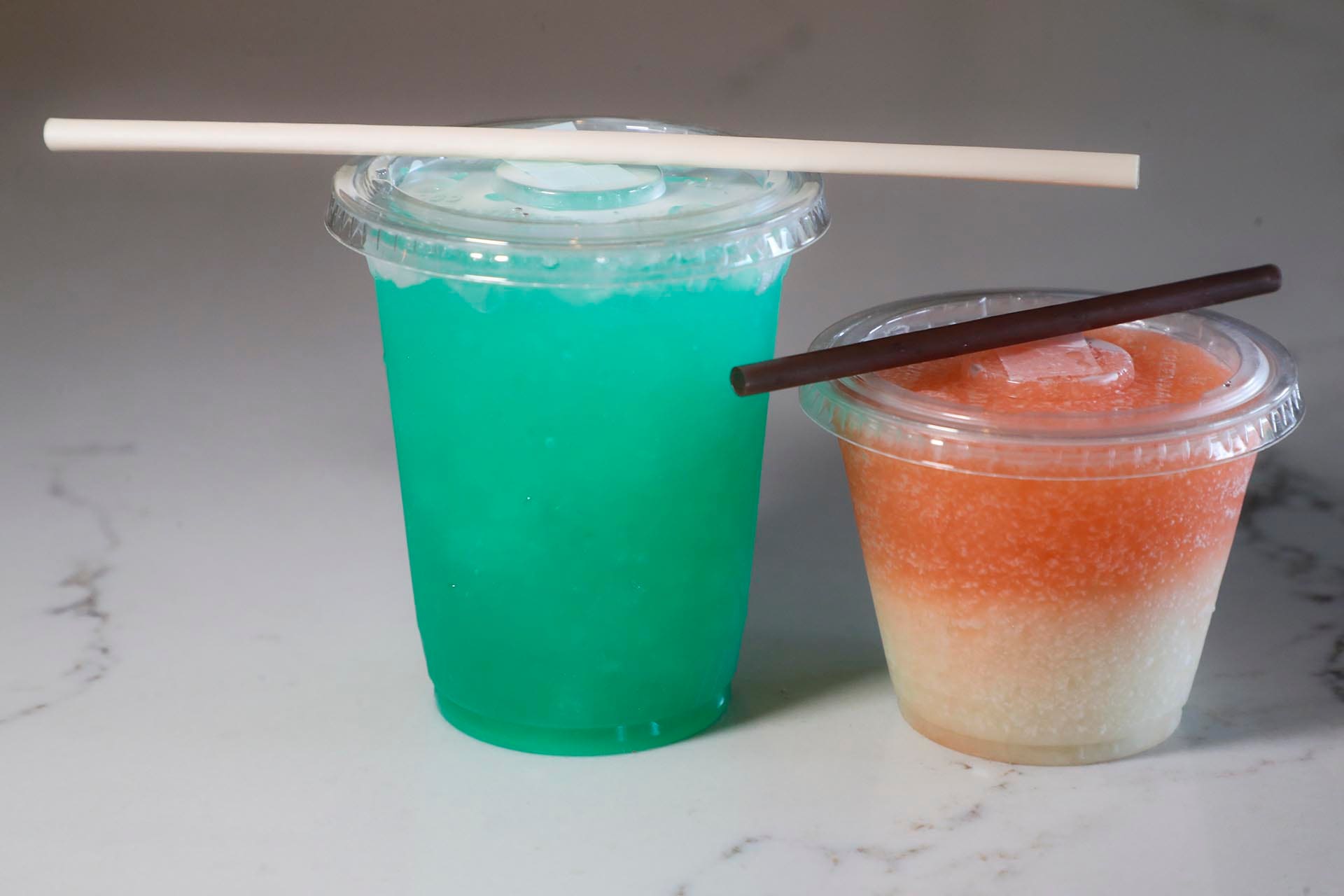
During the pandemic, several states made it legal to sell cocktails to go / Photo by Matthew J. Lee/The Boston Globe via Getty
Alabama and New York are among 39 states that let restaurants and bars sell cocktails to go during the pandemic. Thus far, 16 of them, including Nebraska, Missouri and Virginia, have made permanent changes to their alcohol laws to permit bars and restaurants to sell takeaway booze. Others have pending legislation, according to the National Restaurant Association's Mike Whatley.
"This is probably the most significant change to state alcohol regulation since Prohibition," says Whatley, the association's vice president for state affairs and grassroots advocacy. "We're really seeing states move very quickly on this."
One reason why these laws are changing? People love it. About 80% of consumers in states with temporary to-go booze supported making the change permanent, according to a National Restaurant Association poll.
The change is also a lifeline for restaurants. Whatley says nearly 90% of the restaurants permitted to sell off-premise alcohol did exactly that. In many cases, he says, this increased net sales and enabled restaurants to bring back extra staff during the pandemic.
"This is probably the most significant change to state alcohol regulation since Prohibition." —Mike Whatley, National Restaurant Association
As restaurants across the country reopen dining rooms and increase their capacity, workers say takeaway alcohol sales have waned.
"Our carryout cocktail program isn't a major revenue booster, but it does give us something exciting to talk about with our guests and gets people interested in some of the other things we're doing on-site," says Adam Bartelt, marketing director at Orchestrate Hospitality, which manages nine restaurants in central Iowa.
Restaurants in Iowa could sell beer via takeout pre-pandemic, he says. The state added temporary to-go wine, liquor and mixed-drink sales during the pandemic and recently passed a law that makes the change permanent.
Offering booze to go is convenient for consumers, and gives restaurants a chance to get creative, Bartelt says. For example, Orchestrate's Latin-cuisine restaurant Malo offered bottled Margaritas after hearing diners say they missed pairing cocktails with their favorite dishes.
New York abruptly altered its takeaway alcohol laws in June 2021 / Photo by Bill Tompkins/Getty Images
Whether it's in a dining room or takeout bag, restaurants are eager to find ways to rebound from the last year.
Plus, not everyone is fully comfortable dining in just yet, says Erin Zupicich, chief marketing officer of Heirloom Hospitality Group, which owns three restaurants in Detroit.
Michigan enacted a temporary law that lets restaurants offer to-go mixed-drinks through 2025. Cocktails must be sold in designated sealed containers labeled with the location and an alcohol-consumption warning. It permits delivery in some cases, too, Zupicich says.
Whether it's in a dining room or takeout bag, restaurants are eager to find ways to rebound from the last year.
During the pandemic, Heirloom Hospitality Group created Heirloom Goods, a website combining to-go offerings from each of its restaurants: Townhouse Detroit, Townhouse Birmingham and Prime + Proper. The site also has a butcher, bottle shop, to-go cocktails and meal packages.
"We want to still give the feeling of being with us and allow people to support their favorite businesses any way they feel comfortable," she says. "Long term, I think it’s a nice added bonus to be able to enjoy the comfort of the restaurants you love, but sometimes you want to do that at home. Adding cocktails elevates that experience."
On Mother's Day, for example, Heirloom offered to-go brunch packages with baked goods, salads, quiche and other items, plus fresh-squeezed juice and Champagne. Zupicich says they sold out almost immediately.
The brunch packages "helped us immensely," she says. "It allowed us to offer more variety than simply to-go food."
Every little bit makes a difference, Bartelt adds, especially as restaurants move from a period of survival to growth.
Whatley expects takeout to continue to thrive in the next year. He believes income from to-go alcohol could boost a restaurant's overall off-premises sales by up to 10%.
"Even post-pandemic it’s going to be significant because customers have liked this so much," he says. "Off-premises restaurant food, be it takeout, be it delivery, is going to be more significant now than it was pre-pandemic. We want to make sure that customers are able to get their favorite alcoholic beverage as a part of that transaction."
Whenever possible, cheesemongers recommend that people shop for cheese at independent, cut-to order stores. Cheese is a living thing, and its flavor and texture journeys don't end when it reaches the counter.
It's a cheesemonger's job to keep products at their freshest and most flavorful. "Your mongers are your friends and are always ready to answer all of your questions and recommend the perfect cheese for your needs," says Emilia D'Albero, cheese department manager and buyer at The Greene Grape in Brooklyn, New York.
Not everyone has a shop near them. And if they're being honest, cheesemongers also buy cheese at the grocery store, just a bit differently than most of us.
"Sometimes you just need cheese and you don’t want to interact with any humans," says Emma Harvey, lead cheesemonger at Salt & Bubbles Wine Bar and Market in Essex Junction, Vermont. "When that’s my mood, I skip on over to the grocery store for some uninterrupted cheese hunting."
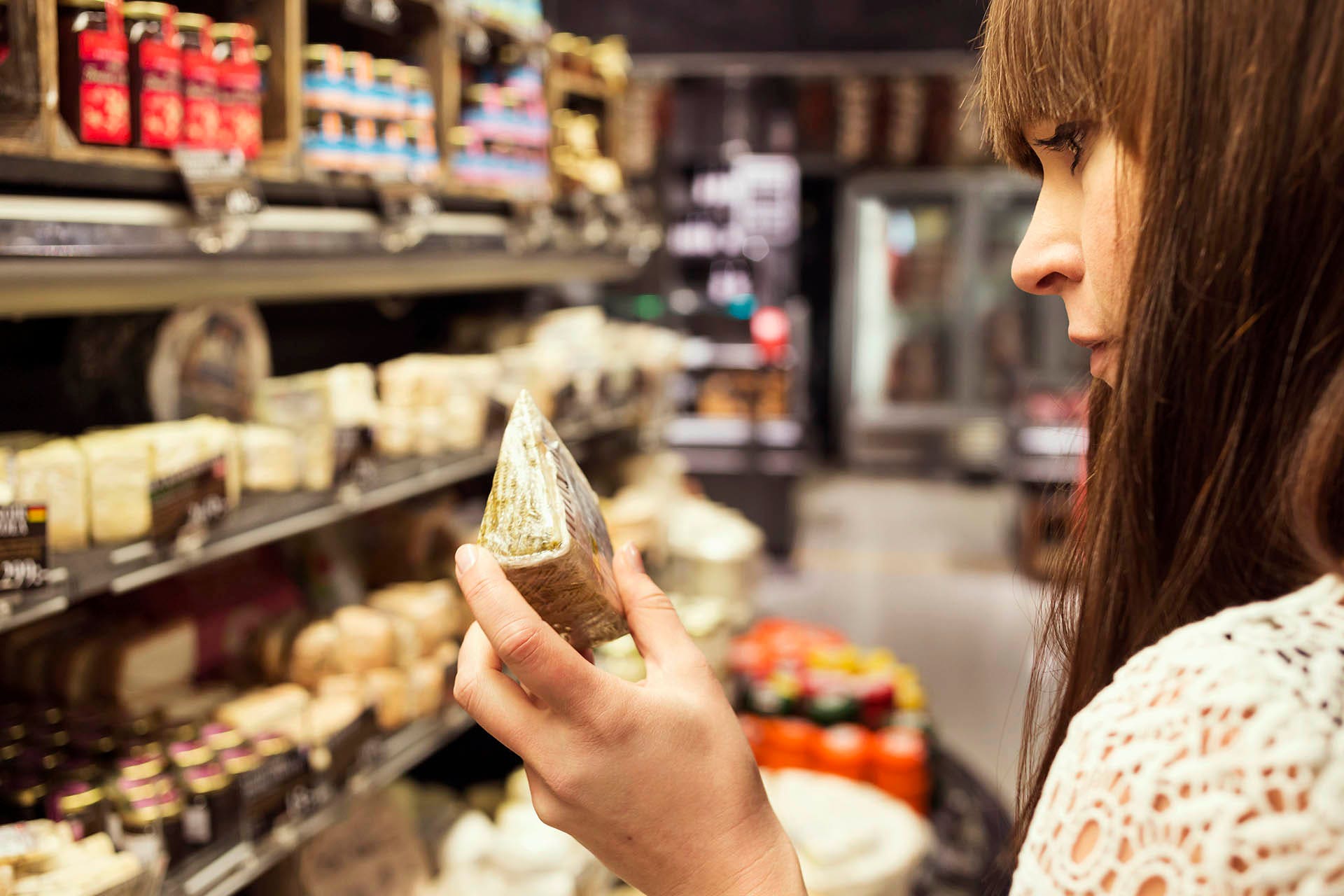
Getty
Not all grocery stores are created equal
Even if you don't have an independent cheese shop near you, there are grocery stores that have cheesemongers, like Whole Foods or some Kroger locations.
If you're on a tight budget, cut-to-order spots can be the best place for cheese. You can buy small pieces, with the minimum order generally around a quarter-pound. Your selection will often be fresher, and with the help of your monger, the cheese will more likely be to your taste.
"Sometimes you just need cheese and you don’t want to interact with any humans.”—Emma Harvey, lead cheesemonger at Salt & Bubbles Wine Bar and Market
"The mongers usually will cut pieces in what's often the most popular size range," says Michelle Vieira, cheese director at Carfagna's Market in Columbus, Ohio. "Generally here in the Midwest, it'll be in the $5–7 range, depending on the cheese." But they're generally happy to cut any size for you.
Another cheese shopping budget trick? Vieira loves the "baby bin."
Subscribe to Wine Enthusiast NewslettersGet the latest news, reviews, recipes and gear sent to your inbox.
Thank You! We've received your email address, and soon you will start getting exclusive offers and news from Wine Enthusiast.
"Most counters have what's called a 'baby bin,' or something along those lines, which are going to be itty bitty pieces that are less than $5," says Vieira. "Those are a great way to try different things without much financial commitment, or you can make a board or a mix for dishes like mac and cheese easily from this."
Lilith Spencer, lifestyle editor at Jasper Hill Farm, at The Cheesemonger Invitational in 2016 / Photo by Mia Nakano
Read the label
"Real cheese is made with milk/cream, salt, cultures and enzymes," says Lilith Spencer, lifestyle editor at Jasper Hill Farm in Greensboro Bend, Vermont. "If you’re looking for a flavored cheese, stick with natural sources like actual herbs and spices, real fruit, chilies, etc."
Mongers also take note of whether the cheese has been made with pasteurized milk, which has been heat-treated to kill potentially harmful bacteria, or raw milk.
"Most counters have what's called a 'baby bin,' or something along those lines, which are going to be itty bitty pieces that are less than $5.” —Michelle Vieira, cheese director at Carfagna's Market
"Raw milk cheeses aren’t automatically better than pasteurized cheeses," says Spencer. But raw-milk cheeses are generally made in a more traditional manner and "often develop more complex flavor profiles,” says Spencer.
A cheese label has valuable information to offer beyond ingredients. According to Vieira, who also worked as a cheesemonger for Whole Foods for nearly five years, cheeses are cut generally on a weekly cycle. Softer, more perishable cheeses are cut twice a week.
"Check the date on the back, a lot of grocery stores now will even tell you down to the date and time it was wrapped to ensure the freshest piece," says Vieira.
Getty
Check the cheese
First, there should be no visible mold or discoloration. At a counter, the standard is clean pieces.
Discolored pieces mean the monger hasn't cared for the products properly. You may not be buying cheese at it freshest.
After your purchase, however, mold is not a dealbreaker on most cheeses. You don't have to throw away a cheese if it grows a bit of white, blue, green or grey mold.
"I’m a total sucker for grocery-store blues.”—Emma Harvey, lead cheesemonger at Salt & Bubbles Wine Bar and Market
Second, consider the packaging. Pre-cut pieces take on a plasticky flavor after a few days. If your grocery store has a monger, it's always best to ask them to cut a fresh piece for you. If you're buying a plastic wrapped piece, D'Albero recommends keeping some cheese paper or cheese bags at home to repackage before you store it.
But ultimately "if a hand-cut, hand-wrapped piece is going to sit in the grocery cooler for days or sometimes weeks, it’s not going to measure up to a pre-packaged piece processed by the producer themselves," says Spencer.
Spencer points to Rogue Creamery’s foiled wedges and Jasper Hill’s flow-wrapped pieces as examples of cheesemaker-designed packaging meant to extend shelf life, retain flavor and travel better.
"While I understand why these sorts of products can come across as less ‘fancy,’ the reality is that these packaging materials are carefully designed by the cheesemakers themselves, with the goal of keeping their cheeses as delicious as possible for as long as possible," says Spencer.
Emilia D'Albero calls Cabot Cheddar "one of my favorite snacks."
"Cabot Creamery is a co-op and they also have a B Corp certification, meaning that they are farmer- and family-owned, and that they work hard to make sure their products are sustainable and respectful to the environment as well as their animals and employees."
Recommended pairing: "My favorite pairings are green grapes, with pickles and butter crackers. Classic and simple, but delicious."
"It's such an inexpensive and versatile option," says Michelle Vieira. "It's made with sheep milk, so it's better quality than cheap feta in most grocery stores."
Recommended pairing: "I really love it with watermelon in the summertime, or in eggs in the morning."
Lilith Spencer of Jasper Hill Farm building a cheese platter to accompany a private virtual cheese tasting / Photo by Samuel Rheaume
Lilith Spencer goes for Pecorino Romano, "because it’s consistent, affordable and it’s a workhorse in the kitchen."
With Calabro Ricotta, "They don’t use any stabilizers, they use local milk, and they’re environmentally conscious, but their products are very affordable and always taste fresh."
Recommended use: Spencer likes to drain ricotta before they use it, especially in hot dishes to concentrate the flavor and keep it from being watery. It's recommended to line a colander with muslin (a cotton-weave fabric) and let the ricotta drain over a bowl, occasionally wringing out the muslin.
Slopehelper Autonomous vehicle, Vipara Valley, Slovenia / Courtesy Pek Automotive
Technology has long been applied to grape growing and winemaking. Recent advancements, however, have shown how automation can help growers to ensure the quality and integrity of their wines. These innovations enable growers across the globe to make more calculated and better-timed decisions, and also reduce the labor needed to carry out vineyard and winery operations.
Smart Vineyards
Smart management systems optimize vineyard work through data and reports collected from devices deployed across the fields. These can monitor anything from weather to the amount of water in the soil.
SmartVineyardcan predict grape disease by analyzing the vineyard's microclimates through precision sensors. This can decrease yield loss, pesticide use and vineyard work.
Terraview provides wineries with real-time data intelligence to tackle challenges like frost and drought. It can also estimate yields and keep track of carbon emissions.
"With Terraview, we can now monitor ripening analysis, have better precision in data acquisition,, and cost reduction in sample collection," says Lluís Coll, technical director of viticulture at Catalonia-based Vallformosa Winery.
In Napa, Robert Mondavi Winery took vineyard monitoring to the next level through a partnership with NASA. With remote-sensing technology that scans vineyards from airplanes and satellites, NASA can help Mondavi measure ripening rate, disease incidence, soil drainage and fruit quality.
Sophisticated Robots
Once associated with cheaper products, robots and machines now aid in the production of quality wines.
First trialed in 2017, Ted is a robot designed to remove weeds with precision, which can reduce the need for chemical weed killers. It's relatively lightweight, so it avoids compacting the soil.
Subscribe to Wine Enthusiast NewslettersGet the latest news, reviews, recipes and gear sent to your inbox.
Thank You! We've received your email address, and soon you will start getting exclusive offers and news from Wine Enthusiast.
Slopehelper, an autonomous electric vehicle, goes a few steps further. It can perform a range of vineyard operations like mowing, mulching, spraying and side-trimming. Slopehelper can also be integrated with the TeroAir system, which can communicate with the vehicle remotely, stream video from the front camera and monitor weather conditions through an on–board weather station.
R2T2 is developing, by motion tracking and data analysis specialist ORME in partnership with Vinovalie Co-op Winery, a pruning robot that can tackle vine-training systems previously only workable by humans.
According to Pauline Laborde-Lacapelle, Vinovalie's head of research and development, R2T2 "works as well as people" on bush vines.
Terraview platform / Photo courtesy Terraview
Symington Family Estates teamed with Germany's University of Geisenheim to develop a mechanical harvester suited to Portugal's Douro slopes, where gradients can reach up to 70%, which is twice as much as the gradient of Los Angeles' Angels Flight funicular.
Production Matters
Technology can also ensure a wine's integrity throughout the production process, from vinification through shipping.
Cooperage Tonnellerie Baron's OXOlineracking system places each barrel on a set of rollers. This allows the containers to be rinsed, filled, racked, cleaned, sampled, rotated and removed while not touching neighboring barrels. Not only does it save hours of work in the cellar and reduces risks of waste, it also avoids oxidation caused by excessive movements.
"The purpose of using this technique is to have a soft tannin extraction: smooth, dense tannins in the wine, and greater length," says enologist Giulio Carmassi, who uses the system at Tuscany's Gagliole Winery.
Packaging and shipping innovations include Stelvin Inside, a closure system that allows for different oxygen transmission rates. With it, winemakers can control the speed of maturation inside the bottle and eliminate the risk of cork taint.
Florent-Pierre Merlier, winemaker at Oregon's Van Duzer Vineyards, also believes it provides quality consistency.
Once bottles leave the winery's premises, Italian platform Wenda's live tracking system monitors shipping conditions like temperature and humidity. Producers can solve issues in real time to ensure that wine's integrity is retained up to the final stages of the supply chain.
Hi y'all. Looking at getting into milling my own grains and am now looking at my storage options. I'm sure I can figure out the containers but as the title suggests I'm wondering about keeping the grains in a shed in good old Victoria with our lovely temp swings. Just built a 12x7.5m shed with aircell in the roof but nothing in the walls. If stored in sealed containers will this be ok?. How and where do you store yours?
Hi, Been brewing from kits and fresh wort for a while. Now Kegging and starting to collect equipment for BIB whole grain brewing. Also, I now like my beer cold!
Hunted United Brewers are excited to announce the annual 2021 Hunter Homebrew Competition which will be held on Saturday 19th June at Hamilton North Bowling Club.
Entries will be judged against the AABC Guidelines, closing date for entries will be Friday 11th June 2021.
All details regarding Styles, Prize Classes and the entry process are available on the comp website at:
Custom built HERMS. 100L kettle, 70L mash/lauter, 70L kettle/whirlpool. Yields about 55L cold wort in fermenter after all losses.
Dusty from being stored and not used but otherwise in very good condition.
All stock pots are Robinox Forje. All fitted with 1/2 BSP fittings that have been hygienically welded by Geordi stainless. Cost of equipment without welding is about $3k. Welded fittings cost and labour $1200. Would like to sell as a package. Looking for $2k. Pickup Macleod Melbourne...
First post long time reader...... I've been brewing all-grain for over a year now using a 65L Brewzilla. I'm very new at experimenting with water salt additions to the mash.
I'm a little concerned with the amount of lactic acid that my recipe from Brewfather calculated (16.8ml for a 50L batch) to bring down my pH level to 5.2pH. Looking to brew tomorrow so I've already purchased my grain bill, concerned with the 16.8ml of lactic acid and if you'll be able to taste the acid in the finial...
Future of To-Go Cocktails Still Uncertain in Some Markets
Across the country, states are grappling with the decision to expand and/or extend temporary measures on to-go cocktails. During the pandemic, 39 states allowed on-premise venues to sell cocktails to-go and 16 of them have made changes to permanently allow takeaway cocktail sales.
As life returns to normal, about 80% of consumers in states with temporary to-go cocktails supported making the changes permanent, according to a poll from the National Restaurant Association.
“Even post-pandemic it’s going to be significant because customers have liked this so much,” said Mike Whatley, National Restaurant Association’s Vice President of State and Local Affairs. “Off-premises restaurant food, be it takeout, be it delivery, is going to be more significant now than it was pre-pandemic. We want to make sure that customers are able to get their favorite alcoholic beverage as a part of that transaction.”