|

Get In Touch With A Low Wage Teleporter
Wednesday, July 21, 2021
Last chance for 20% off ALL recipes on our site 🍻


How Craft Distillers Are Handling Disruptions in Distribution
| | |||||||||||||||||||||||||||||||||||||||||||||||||||||||||||
| |||||||||||||||||||||||||||||||||||||||||||||||||||||||||||




Winning Homebrew
Winning Homebrew |
| Posted: 20 Jul 2021 08:19 PM PDT Recently, I attended a wedding in North Carolina where the hosts gave a small jug of moonshine to all attendees. Impressed by the “shine’s” smooth taste (and potency), I immediately began researching how to make the infamous liquor myself upon arriving back home. Initially created in the late 19th century by poor farmers who struggled to grow crops on hillsides and in hollers, moonshine has recently enjoyed newfound popularity nationwide. Today, many varieties of moonshine are legally available to consumers. Plus, if you have a liquor distiller’s license, you can even make moonshine at home. However, one question I initially struggled with involved moonshine storage. What type of container works best? Does it need refrigeration? How long does it last after it’s made? After conducting thorough research, I found the answers. Here’s everything you need to know about storing moonshine! Select a ContainerYou have three options:
Truthfully, each type will work just fine for most situations, although there are some essential differences to note. PlasticMoonshine typically has a high alcohol percentage. 100 Proof or more is common. Because of this high alcohol content, many people mistakenly believe moonshine will burn through a plastic bottle. While that might have been true 100 years ago, today, plastic containers are strong enough to handle all manner of harsh chemicals, including hydrofluoric acid. You should have no issue using any type of basic plastic containers, such as a pitcher with a lid or even a (clean) two-liter soda bottle. The main advantage of storing moonshine in plastic containers is that they’re cheap. You can store a lot more moonshine, for a lot less, in plastic containers compared to glass ones. Plus, they’re durable and less likely to break if dropped. The main disadvantage is that plastic containers can melt. You’ll want to keep them away from hot temperatures, direct sunlight, and open flames. So, they’re not the best choice if you’re transporting moonshine in a vehicle, either in the trunk or backseat. GlassA glass jar is the best option for storing high-quality moonshine long-term. It keeps the flavors pure. Plastic can subtly change the flavor of moonshine over time, but with glass, the shine you make today will taste the same months or years from now. You’ll find a vast range of glass moonshine jar options. They’re typically called moonshine bottles, spirit bottles, or glass liquor bottles. While a glass bottle specifically made for liquor is best, practically any type of glass container with a sealable top will also work. Don’t forget about a Mason jar. Homemade moonshine is commonly associated with mason jars, mainly because they’re often used with thumper kegs, a key component of the distilling process. But they also make great storage containers for small amounts of moonshine – and you can drink right out of them! JugsMoonshine jugs are typically made from ceramic and offer a tasteful and traditional option. They come with a rubber stopper, and most are either one gallon or one-half gallon in size. Here’s a fun fact: The stoneware and moonshine industries both got their start in the South around the turn of the century, which is a significant reason why ceramic jugs became one of the earliest and most popular ways to transport and store moonshine. Make sure you get a ceramic jug specifically made to store liquor safely. It should have no lead, lacquer, or harmful chemicals. Sometimes, ceramic moonshine jugs are called “old whiskey jugs” or “whiskey jugs.” They have a few benefits. First, they look fantastic. You can store your moonshine on the kitchen counter with pride. Also, because they’re opaque, they help protect the moonshine from direct sunlight and heat.  Store the ContainerOnce your moonshine is in the perfect container, you’re ready to store it. Pick your storage spot carefully because it significantly influences the moonshine’s flavor, freshness, and alcohol content. SunlightFirst, avoid direct sunlight. The sun’s UV rays can cook the moonshine, which causes it to spoil. It’s mainly an issue with glass and plastic containers. A ceramic jug can protect against moderate amounts of indirect sunlight, as long as the area’s not too warm. Otherwise, put your container somewhere cool, dark, and dry. RefrigerationYou can also store a jar of moonshine in the refrigerator. Consistently cool temps help keep moonshine fresh. Plus, some people feel chilling the moonshine makes it go down smoother. Freezing moonshine usually isn’t recommended or necessary – or even possible. Most hard liquor needs exposure to a temperature of at least -150 degrees before it’ll freeze. Considering moonshine is among the highest-proof spirits in existence, the standard home freezer simply isn’t strong enough to freeze it. If the moonshine is harsh, try storing it at room temperature. Doing so allows the heavier oils and alcohols to decompose, mellowing the taste over time. SafetyFinally, keep your moonshine away from kids and pets. Although it’s tempting to think the high-proof alcohol content will act as a natural deterrent, any fan of liquor knows that’s not always the case. Moonshine can be surprisingly smooth and easy to drink, allowing children and animals to ingest a dangerous amount quickly. FAQHere are the answers to common questions about storing shine. What’s the Best Way to Store Moonshine?Store it in sealed glass bottles in a dark location away from direct sunlight. Glass keeps the flavor authentic while preventing spoilage. If you want to store the moonshine for a long time, refrigerate it. Is Storing Moonshine Safe?Generally, yes. Sunlight and heat can spoil moonshine but won’t cause a fire or explosion. However, moonshine can have a high alcohol content, so you want to keep it away from any source of heat which can potentially cause a fire, such as machinery. Don’t keep moonshine containers near your moonshine still. Even though a modern still is very unlikely to explode, it maintains operating temperatures of 200 degrees for several hours. How Long Does Moonshine Last?It depends on the proof and type. After bottling, unflavored, high-proof moonshine stored in cool, dark conditions will retain its flavor for several years or more. Lower-proof (around 38) or flavored moonshine is generally best consumed within two to three months after it’s made. If bottled and refrigerated, it can last a few years unopened or a few months after opening. Does Moonshine Spoil?Technically, unflavored moonshine can’t spoil because it contains no sugars. However, people do refer to moonshine as “spoiled.” They usually mean the sunlight or air has altered the flavor of the moonshine beyond what was initially intended. You can still drink “spoiled” unflavored moonshine – it won’t blind or harm you – but it might taste harsh or odd. For the freshest shine, store it in sealed containers somewhere dark and cool. Flavored moonshine is a different story. Any type of fruit component can spoil. Spoiled fruit moonshine can make you nauseous. Fortunately, fruit moonshine takes several years to spoil. Plus, it’s usually easy to identify, as it often smells rancid. The post How To Store Moonshine appeared first on Winning Homebrew. |
| You are subscribed to email updates from Winning Homebrew. To stop receiving these emails, you may unsubscribe now. | Email delivery powered by Google |
| Google, 1600 Amphitheatre Parkway, Mountain View, CA 94043, United States | |
Wine Enthusiast
Wine Enthusiast |
- Catastrophic Floods Devastate Germany’s Ahr Valley
- Grape Growing and Organic Farming Unite in Oregon
- These 10 Kölsches Are the Antidote to Hot Summer Days
- Wine Enthusiast Podcast: Summer 2021 Outdoor Entertaining
| Catastrophic Floods Devastate Germany’s Ahr Valley Posted: 21 Jul 2021 08:35 AM PDT  Last week, prolonged and torrential rainfall triggered catastrophic floods throughout western Europe, destroying villages and killing nearly 200 people. Among the hardest hit is the Ahr Valley, a small but renowned wine region in western Germany. Much of western Germany experienced more than a month's rainfall within a span of 24 hours. A German meteorologist described the extreme weather event as one unseen in Germany in 500 years. In Ahrweiler, a stretch of towns and villages dotting the basin of the Ahr River, flash floods swept away homes, businesses, vehicles, bridges, roads and entire communities. Almost 200 people have been confirmed dead in Germany, more than 700 are injured and hundreds more are missing. “The economic devastation that accompanied the floods was particularly hard felt by the region's more than 38 wineries, many of whom lost their facilities, cellars, machinery, wine barrels, cellared inventory and more," wrote the German Wine Institute in a statement published yesterday.  One of the wineries reported to have suffered devastating losses is Weingut Meyer-Näkel, a leading producer of German Pinot Noir, known as Spätburgunder, in Dernau. "We got a text in the middle of the night that Meyer-Näkel was destroyed," says Jenna Fields, president of The German Wine Collection, the winery's U.S. importer. With no running water, bridges or roads, not to mention electricity or cell phone reception, the situation in the valley remains dire, says Fields. Her communications with the Näkel family have been limited to scant messages and posts on social media, plus some reports from other winemakers. According to Fields, the fifth-generation winemakers, sisters Meike and Dörte Näkel, "stayed back to try to save the winery… and ended up getting washed away in the flood." The sisters were able to stick together “and hold onto a tree, and they stayed in that tree for seven hours until firefighters and a rescue boat could get to them," says Fields. "The cellar is gone, and they've lost everything, but they're just grateful to be alive."  Julia Bertram of Weingut Bertram-Baltes, another prominent Spätburgunder producer in Dernau, announced on Instagram that the winery, its cellar and wines were destroyed. Fortunately, Bertram, her husband, cofounder Benedikt Baltes, and their family remain safe and without serious injury. Kevin Pike, owner of Schatzi Wines, Bertram-Baltes’ U.S. importer, says that the couple was reunited after Baltes went missing while assisting his family in nearby Mayschoss. Financial losses for Bertram-Baltes and others in the Ahr will be severe, says Pike. "They lost their entire 2019 and 2020 vintages," he says. "It's not just the barrels and cars or equipment, things where insurance can help to replace… They can't remake their 2019 or 2020 Pinot, they've got nothing to sell for two years." Since the floods, winemakers from across Germany have flocked to the region to deliver food, first aid and supplies, and are assisting in the massive clean-up and salvage efforts. The Verband Deutscher Prädikats- und Qualitätsweingüter (VDP), the German association of quality wine producers, and the German Wine Institute have both established bank accounts to collect donations on behalf of Ahr winegrowers. To donate to VDP, click here. The German Wine Institute is collecting donations here. |
| Grape Growing and Organic Farming Unite in Oregon Posted: 21 Jul 2021 05:00 AM PDT  Wine grape-growing is a type of farming, but more and more wineries are diving into a complete, holistic approach that incorporates winemaking into a broader, farm-oriented lifestyle. These five Oregon winery farms prove that there are as many paths to success as there are vintners able to handle the challenges. The Joys of Problem SolvingBig Table FarmClare Carver and Brian Marcy admit that they have "made a lot of mistakes" in the 15 years that they've owned and developed Big Table Farm. But that confession comes with a big side order of joy. "The big, sloppy, naïve experimentation is behind us," says Carver with a grin. "We've earned our stripes. We have a deep understanding that we're working from. So, no more rookie mistakes that are hard on the land, on the animals and on the humans." It's a lot of work to take care of cattle, chickens, goats, draft horses, pigs, sheep, beehives and guard dogs. There was also the painstaking multiyear tasks of barn and winery building, the annual planting of vegetable gardens, tending compost and clearing hillside land to plant an estate vineyard. One might suppose these two are tapped out. Not even close. 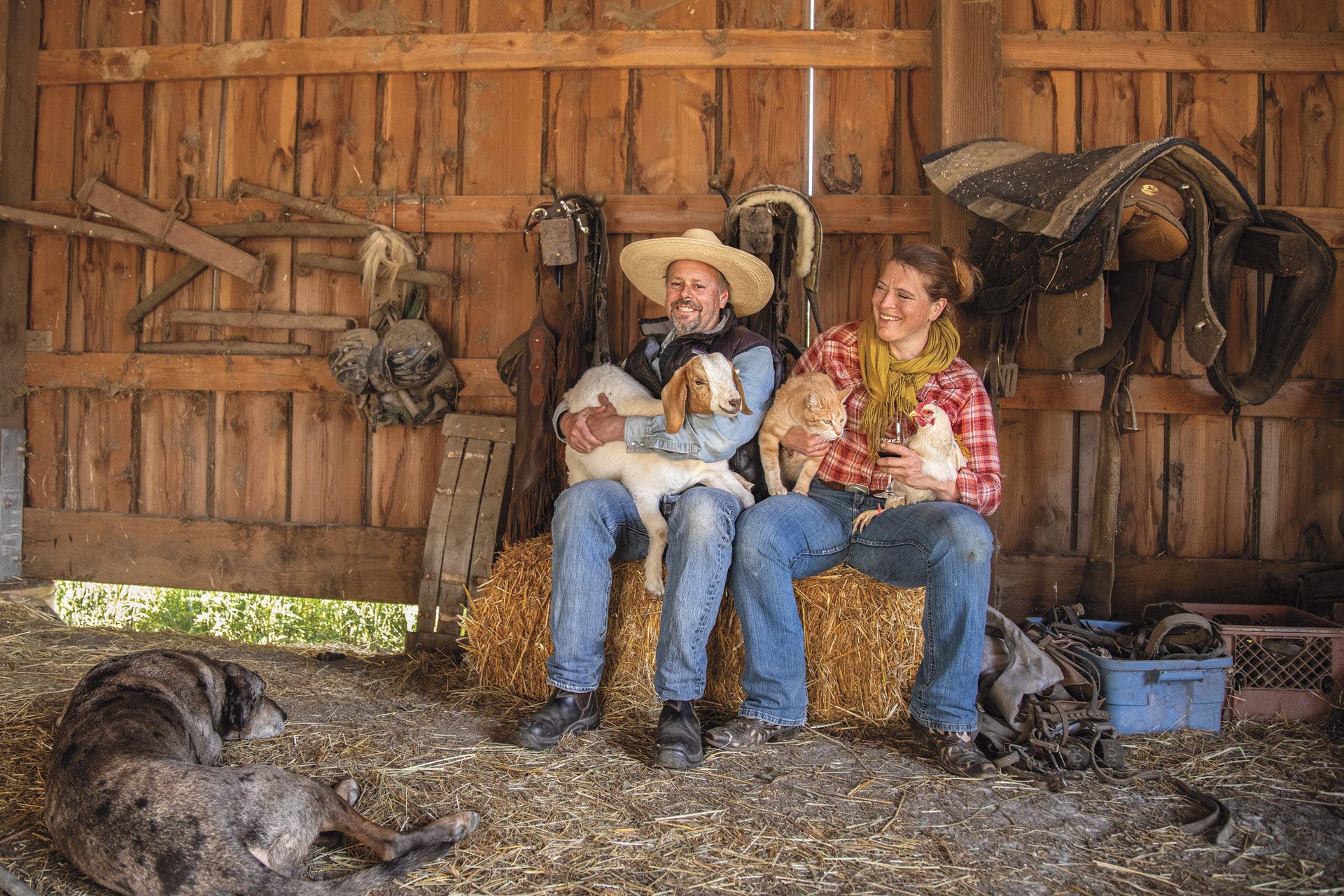 Carver is a professional artist with a thriving studio. She designs the winery's hand-drawn and letterpress printed labels. Marcy is in the midst of fencing, planning and planting the first estate vineyard. As with everything they undertake, the seemingly straightforward task of clearing trees and underbrush has been an opportunity to learn, innovate and find a better eco-friendly solution. "We have never done a brush burn in 15 years because we are carbon sensitive," says Carver, referring to the idea that the smoke from a burn would cause further pollution. So what to do with piles of brush from the 13-acre hillside? They contacted a company called Blackwood Solutions that uses a Carbonator to convert the brush into biochar through a low-oxygen, high-temperature burn that puts no carbon into the air. What's left is basically charcoal, which goes into the compost pile. "Everything we've done in the past is informing what we're about to do next," says Marcy. "We're learning about soil, how active it is, a whole unseen aspect of life that to me is just fascinating. And the contribution that animals make to the health of the world, the microbiology they move around in their guts. Ruminants are basically fermentation vessels on legs. They convert cellulose into protein and fat in a way that nothing else can." Wine to try: Big Table Farm 2019 The Wild Bee Chardonnay (Willamette Valley); $30, 91 points. It’s fair to assume that with alcohol dropped down to the low 12% range, this is going to be a highly acidic wine. That it is, but along with the zippy, lemony acidity comes nuanced flavors of lemon zest, green pineapple, green banana and a hint of peanut butter in the finish. The wine was barrel-fermented in mostly neutral French oak. Ardent and Abiding EnvironmentalismMineral Springs RanchTony Soter says his late wife, Michelle, inspired and helped create a farm and winery dedicated to environmentalism, organics, biodynamics, nutrition and holistic living. On an early spring stroll around the 240-acre property, he dove eagerly into the details. Wine, he says, takes an agricultural commodity, grapes, and adds value. "So much of agriculture is commodity driven," says Soter. "And it doesn't leave much profit if you want to be a successful small farmer." His idea is to inspire other small farmers to add value to their products so they can sell directly to end users. "What we hope is the reinvention of small rural agriculture as a way to make a living and to put people back in the land."
Ranch Manager Nadine Basile is in charge of "anything that's living on the property," says Soter. Along with wine grapes, that includes vegetables, orchards, grains, bees, cows, pigs, chickens, turkeys, sheep (which tend the vineyard floor) and goats (which help manage forested areas). In the vineyard, the emphasis is on a scientific approach to biodynamic practices, which Soter traces back to his years as a consultant in Napa. "It was in part out of self-interest," he jokes. "I eat more grapes than 10 people put together in any given season. And I would prefer to eat grapes that don't have anything really toxic on them. So my liver thanks me for that commitment." These practices add value and improve wine quality. "The brilliance of biodynamics was foretelling a better understanding of the biology of growing plants and ecosystems," says Soter. "How can we learn from nature what works and doesn't work to achieve our aims? So the more in concert we are, the less in conflict we are." A dining program, Provisions, encapsulates these goals. It offers visitors a farm-sourced meal of light dishes paired with wines. "It's not a profit center, it's a demonstration center," says Soter. "And it's so popular that it's paying for the chef and the sous chef and dishwasher. Perfect." Wine to try: Soter 2018 Estates Pinot Noir (Willamette Valley); $50, 93 points. Soter produces four tiers of Pinot Noir, the Estates being the newest, a blend of vineyards on Ribbon Ridge and in the Eola-Amity Hills AVA. This young wine needs another year or two to completely integrate, but the components are all in place—bright raspberry fruit, a strong citrus flavor adding zest and acidity, and crisp definition through the finish. It was aged in 40% new French oak. Drink from 2023 on. 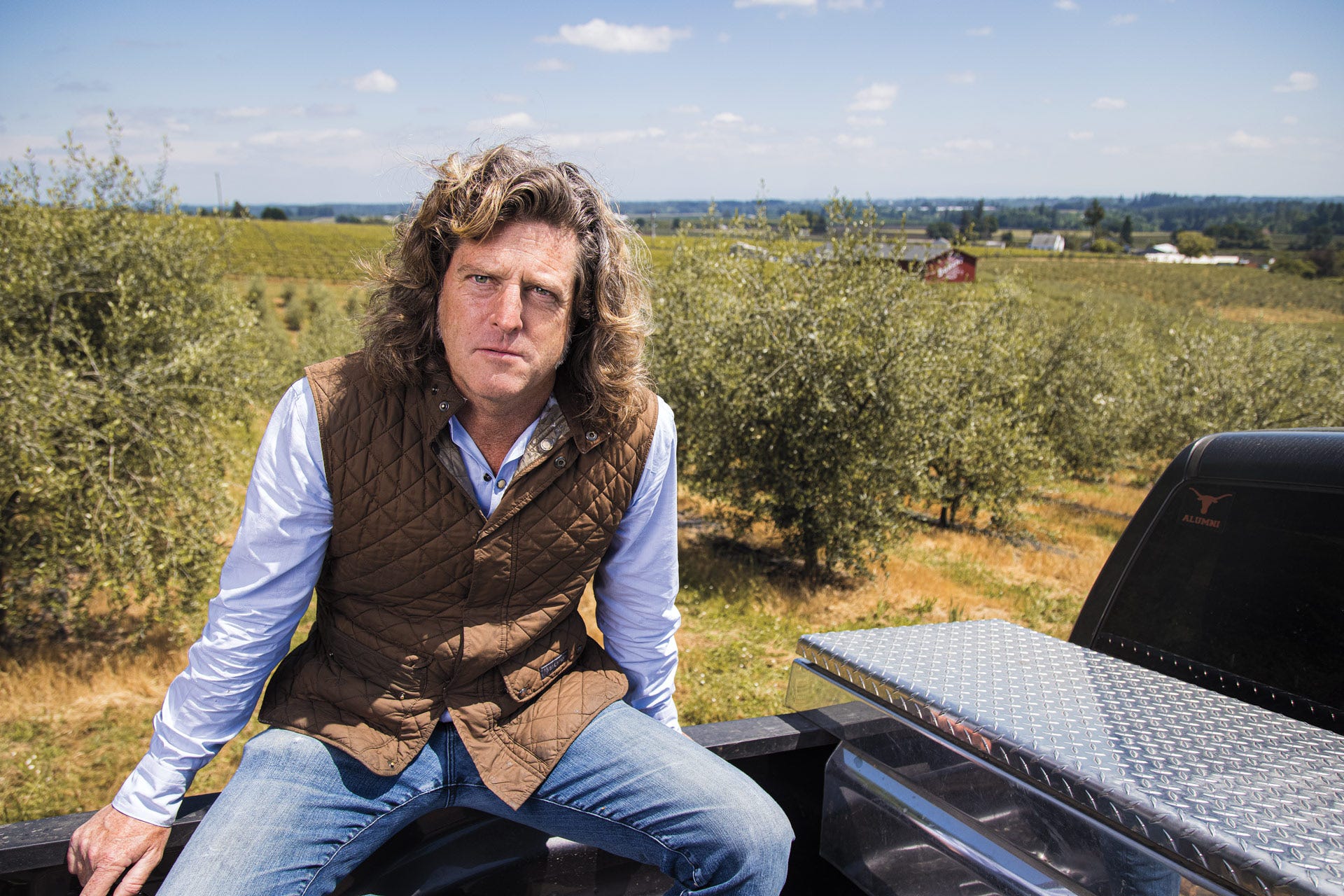 Oregon's OliotecaDurant at Red Ridge FarmsMany wineries vie for grapes from Durant Vineyard. You'll find its name featured on dozens of bottles from leading Willamette Valley producers. In addition, the estate winery produces around 5,000 cases a year, principally Pinot Noir, along with Pinot Gris, Chardonnay, Sauvignon Blanc and a lovely rosé. A number of talented winemakers have made wine with these estate vines, like Marcus Goodfellow, Joe Dobbes, Isabelle Dutarte and most recently, Spencer Spetnagel, who came from King Estate in 2018. But despite the success of the vineyard and its wines, Paul Durant, the owner and general manager, is most excited about his extra-virgin olive oils. His parents purchased the property in the early 1970s. Immediately, they planted vines and grew walnuts, cherries and hazelnuts. "They had no money, so they bought cheap hillside dirt that doesn't produce well for row crops," says Durant. "So now 40 years later, it's the most sought-after ground in the county. They got a lottery ticket." The expansive 135-acre property includes a well-stocked gift shop, tasting room, short-term lodging and plant nursery. That's in addition to 17 acres of olive trees planted starting in 2004. A desire to try something new ("it's in the family DNA," says Durant) initiated the project, but it's his implacable enthusiasm that sustains it. "Within the olive-tree world, there's all different varieties, but the arc of time takes a long while to really figure out how to grow them," he says. The gift shop offers a number of varietal oils and many other homegrown and local products. As visitors begin to return to the farm, a new Italian olive mill is planned to replace the well-worn original. Durant plans to quadruple production, currently up to 8,000 gallons a year. During the pandemic, Durant says olive oil sustained the business. "This is what I've always wanted to do," he says. "We don't aspire to be big wine producers. Four to six thousand cases of wine a year. That's it. I like the customer connection." Wine to try: Durant 2019 Southview Pinot Gris (Dundee Hills); $25, 91 points. This is a well-balanced, meticulous take on this variety, all stainless fermented and finished crisp and clean. Aromas and flavors favor lovage, fennel and cilantro, with crunchy pear fruit filling out the midpalate. It’s a most refreshing style, unencumbered by barrel flavors.  Grazing-Based ViticultureAntiquum FarmAsk Owner Stephen Hagen to explain what he means by grazing-based viticulture, and prepare for a doctoral thesis. Topics range from animal husbandry, the irrelevance of clones and the growth of upside-down grape clusters with mutant berries. The idea behind grazing-based viticulture, says Hagen, is to coax site-specific terroir from a particular place. He and his wife, Niki, began to plant shortly after they purchased the property in 1999. From the start, they farmed organically. Some years later, he says, "a light bulb popped off in my head as I was spreading organic amendments. I was asking people how they get expression of place. And the answer was always, 'by farming organically.' But we're all using the same stuff. I realized we're talking about this thing, but we're not really doing it."
The quest for unique site-specific terroir became increasingly complicated. "What is compost?" he asks. "It's forage passed through the animals. So why not skip the cows and start farming microbes? How do we get wines that really have a personality, that really feel alive? You fill the vineyard up with life." In the course of experiments, Antiquum (pronounced ann-tick-you-um) has grown to 140 acres, with 21 under vine. The vineyard is divided up into much smaller segments amenable to what Hagen calls "rotational intensive grazing." In simple terms, animals are rotated through in a specific order based upon grazing habits and the vines' growing cycle. First pigs, then sheep, followed by geese ("pound for pound, nothing grazes like geese"). Finally, the chickens enter. "The grazers have exposed the insects and also pooped," says Hagen. "The chickens go through the manure, scratching it, exposing the insect larvae, eating the eggs and anything that hatches. I call them the 'weeding and sanitation crew.' " The operation requires substantial numbers of these animals, which must be fed, sheltered and protected from predators. Seven large dogs roam the property. They're the glue that holds the structure together. "This is not a system," he says. "This is a lifestyle. This never stops. There's no Sunday, no vacation. The timing is where the art is. Leaving enough material to photosynthesize and recover, but not letting it go to seed. No one else in the world is doing what we do." Wine to try: Antiquum Farm 2018 Juel Pinot Noir (Willamette Valley); $40, 92 points. Juel blends different clones from the estate into a fruit-driven wine with blueberry, plum and black cherry flavors. It’s smooth and fresh, the ripe fruit flavors nicely framed with skin tannins that run through a lingering finish.  Wines, Weddings and Silo SuitesAbbey Road FarmAbbey Road Winemaker James Rahn sits at a picnic table and sips rosé on a warm late-winter afternoon. Just four years ago, the site was a grass-seed farm with stables and a horse arena. The property has been almost magically transformed into a manicured 82-acre farm. It hosts special events and weddings, offers overnight lodging in a renovated grain silo and features walking tours and luxurious breakfasts prepared by Will Preisch, the innkeeper and chef. Owners Sandi and Daniel Wilkens are partners in Quaintrelle, a Portland farm-to-table restaurant. Their original goal of a special events venue is changing, says Rahn. After he joined Abbey Road Farm in 2018, the first wines Rahn made were rosés for wedding parties and tasting room sales. Demand took off quickly, and vineyard planting began that October. Already, 16 varieties have been planted that include under-the-Willamette-radar grapes like Aligoté, Godello, Mencia, Mondeuse, Poulsard, Trousseau and Trousseau Gris. These are part of a plan to expand beyond wines made from the region's standard program of Pinot Gris, Chardonnay and Pinot Noir. Rahn's years as a sommelier and previous efforts to market his own wines convinced him it was much easier to offer different varieties than sell yet another Pinot Noir to a restaurant that might already have dozens on the list. From a business standpoint, he says, less well-known varieties can succeed because people, especially millennials, are hungry to try something different. "Another school of thought is we don't know what else is going to thrive here," he says. "Which is not to snub Pinot Noir. That is the legacy, and I'm thankful for that. But we want to have fun. Is this going to work here? We're going to give it a go. And with grafting, you don't lose a single vintage." Ultimately, plans for Abbey Road Farm include an on-site incubator winery and enough gardens to supply Quaintrelle and local markets with fresh produce. But the main goal is to be a place where visitors may enjoy the best of Oregon's food, wine and hospitality. Wine to try: Abbey Road Farm 2018 Chardonnay (Willamette Valley); $37, 90 points. A 50-50 blend of Yamhill-Carlton and Ribbon Ridge fruit, this outperforms the listed low alcohol degree of ripeness. It’s crisp and lean to be sure, with ample lime, grapefruit and green apple flavors firmly framed with phenolic highlights from whole-cluster pressing. No new oak was used. |
| These 10 Kölsches Are the Antidote to Hot Summer Days Posted: 21 Jul 2021 04:24 AM PDT  Before small American craft brewers began making lagers by the barrel, they embraced the kölsch. Fermented with ale yeast and cold lager temperatures, this hybrid is both fruity and crisp, and well-made examples are prized for their subtlety. The style has its origins in Cologne, Germany, where it is brewed to precise specifications and falls under the Reinheitsgebot, or brewing purity law. It is a beer meant for gathering and comradery and in the city of its creation there are rituals involved with its consumption. Pubs and breweries that will serve round after round to patrons, making a tick mark on a coaster to indicate the number of glasses served. When the drinker has finally had enough, the check marks are tallied and a bill issued. That is not as commonplace in the U.S. nor is the proper glass: a Stange, a tall narrow glass. For small breweries that opened in the U.S. in the 1980s and 1990s, kölsch was an ale that could be served to traditional lager drinkers. Yet the style remains popular today both in Germany and the U.S., where brewers largely stick with tradition rather than seeking to add bells and whistles to their recipes. The style provides a soft malt character, a low hop profile and a playground for yeasty flavors to run rampant, although some brewers occasionally seek to push the envelope both in alcohol and hoppy characteristics. Some breweries choose to call their kölsch a golden ale or even a summer ale, and while that is a bit of marketing, it still makes sense. The style is perfect for the summer months or anytime cool refreshment is called for. With mid to low alcohol and an unadorned nature, it is a great beer for the beach or a reward after some yardwork. Look for a kölsch that is pale yellow in color, with a crystal-clear pour and a modest head. It's one of the best options for stocking a cooler in the hot months of the year. A Stange is not necessary but encouraged. Exhibit A Goody Two Shoes Kölsch Style Ale; $11/16oz 4 pack, 96 points. This is the beer, pint after pint, that delivers on the proper balance of the four main ingredients without weighing down the palate. Slightly fruity, with a floral hop character and a touch of minerality, it's a beer for all occasions. It facilitates a good time and puts a jump in your step. Westbound & Down/Bierstadt Lager Chicago Peaks Kölsch; $12/16oz 4 pack, 95 points. Crisp and slightly fruity, with a sweet finish, this collaboration pours a pale golden yellow. Refreshing and thirst quenching, it is a particular delight on hot, humid days when only something light will do the trick. It is a well-appointed ale that does a lot with simple ingredients. 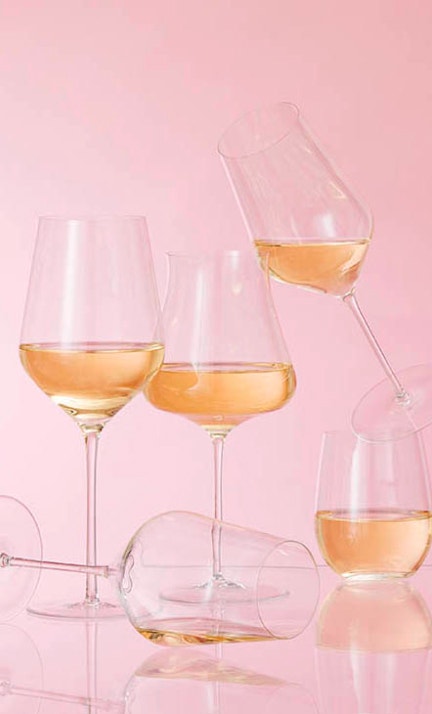  Springdale Kölsch Money; $16/16oz 4 pack, 94 points. Golden yellow in color, with citrus accents, this is a beer you can drink all day, any day. An orange peel note emerges as the glass empties, along with a honey-like malt flavor. Blackberry Farm Goat Hill Golden Ale; $12/12oz 6 pack, 93 points. This beer would be a welcome reward after a long day of activity. Not just for refreshment, but it challenges the taste buds with perfumy, floral hops that lead into a sweet and slightly fruity palate. It's a rounded, full flavored pour. Three Weavers Seafarer Kölsch-style Ale; $12/12oz 6 pack, 92 points. This beer is clean and refreshing, with a touch of sweetness on the finish. It has a little hop bitterness that appears on the midpalate and builds toward the finish in pleasing earthy and citrus-laden accents. Dovetail Kölsch; $12/16oz 4 pack, 91 points. This is a crisp and slightly fruity Kölsch that delivers on refreshment sip after sip. Some will call this a lawnmower beer, but it is better suited for patio conversations, in a proper glass, with no immediate plans on the schedule. Rosenstadt Kölsch; $12/12oz 6 pack, 91 points. This pours a dark yellow gold with a robust head. Whiffs of mineral water and bready malt arrive first, followed by earthy, slightly spicy hops. This glass would quickly empty over long afternoon conversation with friends. Four Peaks Tribute Sunbru Kölsch-style Ale; $10/12o 6 pack, 90 points. This offers jaunty combination of ale sweetness and lager crispness, with a fruity thread bringing it all together. It is refreshing as all get out, is made for hot days. Odell Kindling Golden Ale; $10/12oz 6 pack, 90 points. This kölsch is on the sweeter side, with a noticeable caramel malt note and a sweet flan finish. The hops play in the background alongside a slight citrus note. It's full bodied and fun to drink. Prost Kölsch; $10/12oz 6 pack, 90 points. This ale offers forward aromas of minerals and hops, with a clean malt profile and slightly fruity finish. It's a proper day drinking beer at the ballpark or at home listening to the broadcast from the first pitch to the last out. |
| Wine Enthusiast Podcast: Summer 2021 Outdoor Entertaining Posted: 21 Jul 2021 04:00 AM PDT  With summer in full swing and many eager to return to in-person gatherings, we're here to talk about the new considerations for outdoor entertaining. In this episode, Associate Managing Editor of Print Layla Schlack talks to two sommeliers about crowd-pleasing bottles that go with anything you might be serving at your barbecue or picnic, as well as what to bust out to make any summer gathering feel like a party. Joining Layla is Cory Holt, a sommelier with Union Square Hospitality Group and founder of Bridges Wine Culture consulting, and Tahiirah Habibi, founder of Hue Society and a previous 40 Under 40 honoree. They're both serving up bubbles, magnums and more this summer, so grab your glass and get ready for all the pro tips to making this summer wine sensational. For more tips on summer-ready selections, check out these fun pét-nats to sip in the sun, or consider these liter-sized bottles for a little extra something in that bottle shared between friends. If you're keen on a theme for your gathering and love to think pink, read up on how to organize a six-bottle masterclass to rosé to get your drink and learn on.
|

| You are subscribed to email updates from Wine Enthusiast. To stop receiving these emails, you may unsubscribe now. | Email delivery powered by Google |
| Google, 1600 Amphitheatre Parkway, Mountain View, CA 94043, United States | |
Subscribe to:
Posts (Atom)

[Get] Deals On Wine Products. RSS Feeds Page #1

How To Make Wine YouTube Videos And Home Brewing Products

YouTube Channels / Beer Magazines / Beer Podcasts / Beer Blogs With Rss Feeds !


